 Reviews



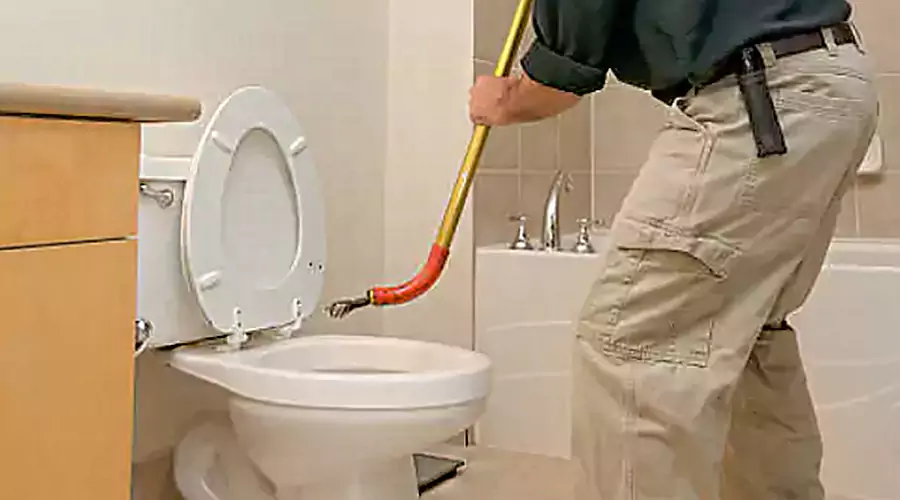
A toilet snake can reach a clog that a plunger cannot, while a clogged-toilet repair costs about $85 to $600 in 2026 when DIY clearing fails. Use a toilet-specific closet auger because its protective guide is designed to reduce metal contact with the porcelain. Sewer cleaning can also help clear deeper blockages when a toilet clog is connected to the main sewer line.
Learning how to snake a toilet is mainly about control. The cable must follow the curved trap without being forced.
A snake can break up soft material. It can also hook some solid objects so they can be pulled back through the bowl.
When Should You Snake a Toilet?
Use a toilet auger after correct plunging fails but the blockage still appears limited to one fixture. The method is most useful when the obstruction sits deeper inside the toilet trap. Multiple affected drains point toward a different problem farther into the waste system.
- A plunger should normally come first.
- A closet auger reaches farther.
- A rigid foreign object needs special caution.
- Do not use excessive force when resistance appears.
This Old House recommends moving to a toilet snake when a plunger cannot clear a stubborn blockage.
If the bowl is close to overflowing, control the water before using any tool.
What Type of Snake Should You Use?
A closet auger is made for toilet work. It contains a flexible cable and a curved guide that enters the bowl outlet. The protective section helps reduce scratches while the cable travels through the trap.
- A general drain snake can leave exposed metal against glazed porcelain.
- That makes tool choice important.
- Look for a toilet or closet auger.
- Inspect the cable before use.
- Replace a badly kinked or rusted cable.
- The handle should rotate smoothly.
A standard model is long enough to reach many fixture-level obstructions without entering deep building piping.
This Old House describes toilet snakes as flexible cables with protective tubing that helps prevent scratches.
What Should You Do Before Snaking the Toilet?
Bring the bowl to a safe water level before inserting the auger. Too much standing water creates a splash risk. Too little water can make it harder to observe whether the drain improves after the obstruction begins moving.
- Stop flushing.
- Close the supply valve if needed.
- Put towels around the base.
- Wear rubber gloves.
- Remove excess bowl water when necessary.
- Position a bucket nearby for debris.
Do not add chemical drain cleaner before mechanical work.
A cable can splash liquid back toward you.
Chemical exposure makes that situation more dangerous than ordinary wastewater alone.
How Do You Snake a Toilet Step by Step?
Correct snaking a toilet technique uses short controlled cable movements. Keep the guide firmly positioned in the bowl outlet. Advance the cable while turning the crank. When resistance appears, work slowly rather than forcing the cable through the obstruction.
- Place the auger guide into the toilet outlet.
- Keep the protective section against the bowl.
- Turn the handle clockwise.
- Feed the cable forward slowly.
- Stop when resistance becomes noticeable.
- Rotate while applying light pressure.
- Pull back slightly if the cable will not advance.
- Continue in short sections.
- Retract the cable carefully.
- Inspect the tip for debris.
This Old House recommends keeping only a short length of cable exposed. Short sections provide more torque and better control through the trap.
Home Depot also identifies a toilet auger as the next step when plunging does not clear the clog.
How Can You Tell When the Snake Reaches the Clog?
Resistance that appears after the cable has entered the trap can indicate the obstruction. The difficulty is that the cable also encounters natural bends. The feel should change as you rotate and gently move the cable in either direction. Grease trap installation can also help prevent recurring drainage issues in plumbing systems where grease and food waste require controlled collection.
- A soft obstruction often feels springy.
- Paper may gradually give way.
- A rigid item can produce a firmer stop.
- Do not automatically push harder.
- Retract the cable slightly.
- Rotate it again.
- Then advance in a controlled motion.
A foreign object can sometimes catch on the coiled end and come back with the cable.
The goal is not always to push the obstruction forward.
Retrieval can be the safer outcome.
What Should You Do When the Cable Will Not Move?
Stop adding force when the cable refuses to advance. The snake can bind inside the toilet's internal curve. A cable can also become trapped around a rigid obstruction. More force increases the chance of scratching the surface or damaging the tool.
- Reverse the crank slightly.
- Pull back several inches.
- Then rotate forward again.
- Keep the exposed cable short.
This Old House recommends advancing in small sections when working through the toilet trap.
If the same hard stop remains at exactly the same point, consider the possibility of a solid object.
Continued force may send that object farther into the drain.
How Do You Know the Toilet Is Clear?
Successful snaking should restore fast water movement through the bowl. Do not assume the job is complete just because the cable moved past resistance. Part of a soft blockage can remain against the trap wall and catch material during the next flush.
- Retract the cable completely.
- Remove any debris.
- Allow the bowl to settle.
- Add a controlled amount of water.
- Watch the drain speed.
- A clear trap should accept the water quickly.
- Flush only after the controlled test succeeds.
This Old House recommends checking whether the toilet drains quickly and completely after the cable is removed.
Slow drainage means another pass may be needed.
What Should You Avoid When Snaking a Toilet?
Avoid using a damaged cable because sharp metal can scratch the porcelain. Do not combine mechanical snaking with unknown chemicals in the bowl. Never force a snake through a rigid obstruction when you do not know what the cable has reached.
- Do not expose excessive cable length.
- Long exposed sections can whip or buckle.
- Do not crank wildly.
- Steady rotation gives you more control.
- Do not treat every resistance point as a clog.
- The trap itself has bends.
- Do not continue indefinitely when the toilet remains unchanged.
A restriction farther down the drain needs a different approach.
When Should You Call a Professional?
Professional help becomes reasonable when the auger cannot pass the blockage or the toilet remains restricted after several controlled attempts. Multiple affected fixtures also suggest that the problem lies deeper than the toilet trap and may require longer drain equipment.
In 2026, clogged toilet repair runs about $85 to $600. Drain pipe repairs can cost roughly $70 to $700 depending on the underlying issue.
Professional diagnosis is appropriate when:
- Several fixtures back up together.
- Wastewater enters a tub.
- A solid object cannot be retrieved.
- The snake becomes stuck.
- The blockage returns quickly.
- The cable reaches full length without changing drainage.
A deeper blockage can sit beyond the practical reach of a closet auger.
How Can You Prevent Another Deep Toilet Clog?
A toilet auger should be an occasional repair tool rather than regular maintenance. Repeated need for the tool suggests that material is entering the toilet that should not be flushed or that an underlying restriction remains.
- Dispose of wipes in the trash.
- Keep paper towels out of the toilet.
- Avoid oversized toilet-paper loads.
- Keep small objects away from the bowl.
- Watch for increasingly slow flushes.
- Respond before the drain closes completely.
The EPA requires WaterSense toilets to meet flush-performance criteria while using no more than 1.28 gallons per flush. Efficient water use alone does not explain repeated deep clogs in a properly working toilet.
Conclusion
Correct snaking a toilet technique uses a toilet-specific auger and short cable movements. Advance the cable gently while rotating it through the trap. Pull back when resistance becomes rigid rather than forcing the tool. Test drainage with a controlled amount of water before using a full flush. If the blockage remains or affects other fixtures, deeper investigation may be needed. Inspect your auger before its next use.
Frequently Asked Questions
Is a toilet snake the same as a toilet auger?
The terms are often used together. A closet auger is the toilet-specific version with a protective guide designed for the bowl.
Can a toilet snake scratch porcelain?
Exposed metal can scratch glazed surfaces. Keep the protective guide correctly positioned throughout the job.
How far should a toilet snake go?
Advance only as far as the tool is designed to travel. Do not force the cable when it reaches a hard stop.
Can a snake retrieve a toy?
Sometimes the coiled end can catch a solid item. If it cannot be retrieved safely, stop before pushing it farther downstream.
Should you snake a toilet after using chemicals?
Mechanical work can splash material from the bowl. Avoid snaking when unknown or hazardous chemicals are present.